MVM EGI DRY COOLING SOLUTIONS
Less water, more power / our dry cooling solutions for fossil fuel, biomass, waste-to-energy and nuclear power plants


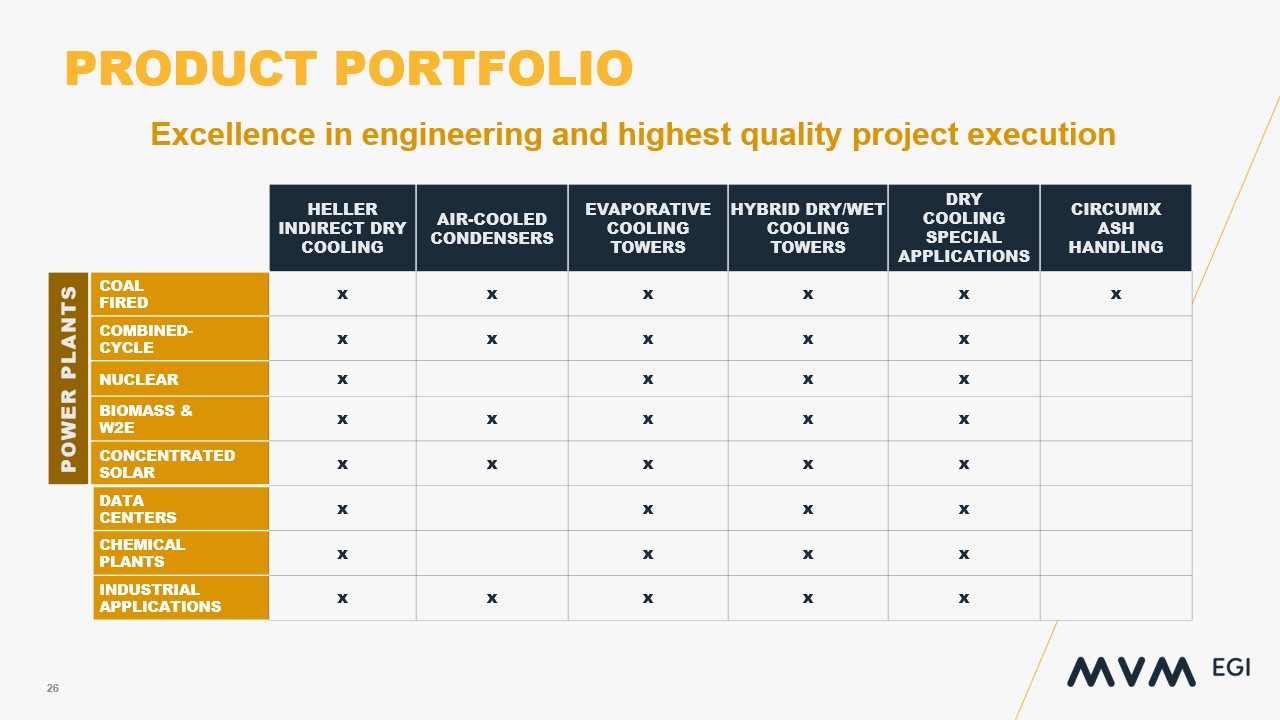
EGI portfolio

Cooling solutions for nuclear power plants 


Nuclear power – from advanced Small Modular Reactors (SMRs) to large-scale 1000+ MW units – requires cooling solutions that combine safety, reliability, and adaptability. MVM EGI provides the full spectrum of technologies, from advanced wet cooling systems to hybrid and fully dry solutions, supporting both main and auxiliary circuits of nuclear plants worldwide.


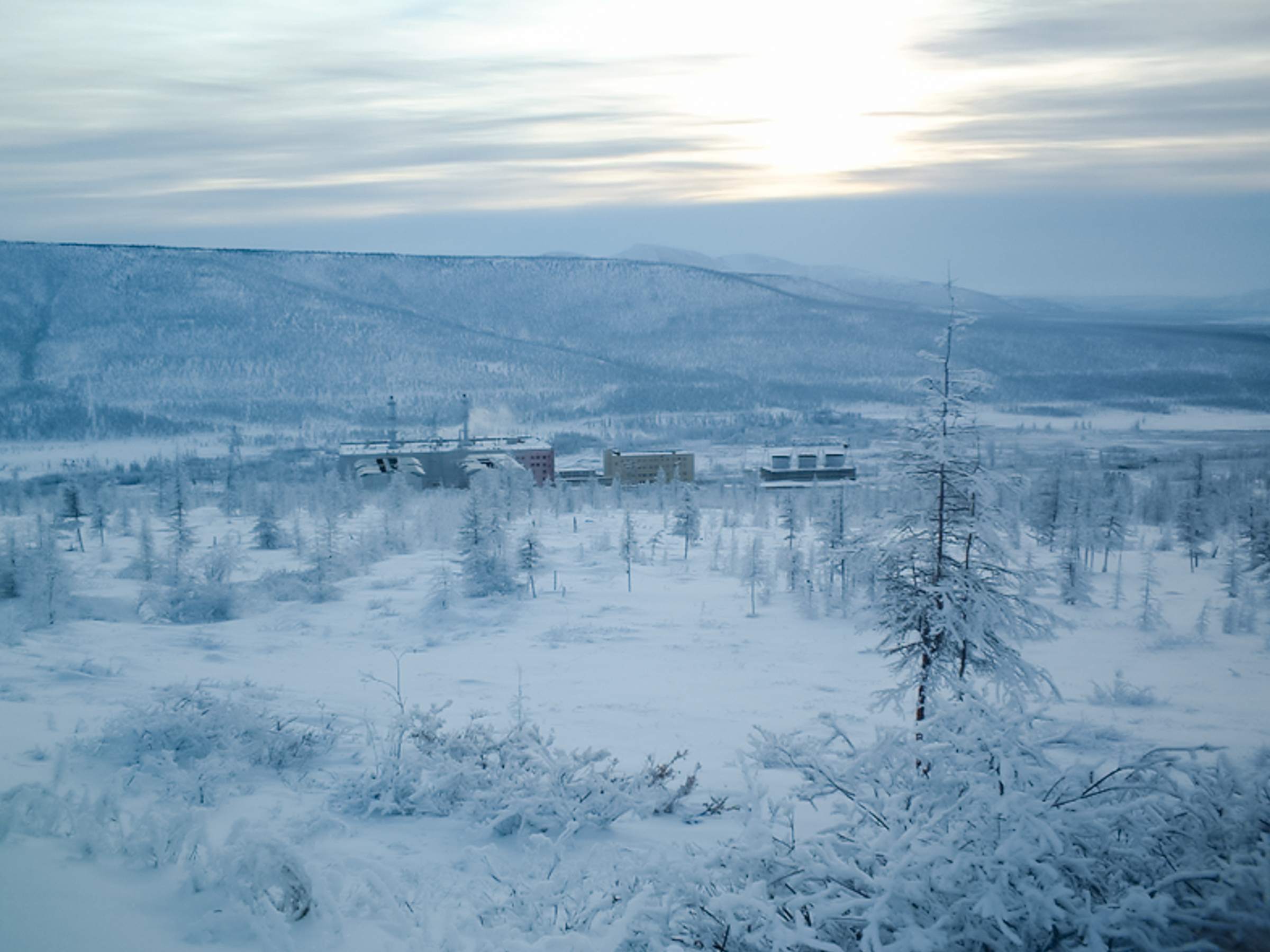
Drawing on decades of engineering experience, including proven references such as the world’s only dry-cooled nuclear power plant in Bilibino, MVM EGI delivers cooling systems that ensure operational safety, environmental responsibility, and long-term performance under the most demanding conditions.


Our solutions draw on more than 75 years of experience to help operators around the world reduce water consumption, secure permits in water-scarce regions, and ensure long-term performance under extreme climatic and regulatory conditions.   
 

MVM EGI delivers not just cooling systems, but strategic outcomes: lower risk, better ESG positioning, and greater peace of mind. 

More information: For a detailed overview of water-saving cooling solutions for large nuclear plants, see our presentation HERE, delivered at the ACC Users Group 2025 conference. 


Dry cooling for different applications:


Heller Indirect Dry Cooling System 


Invented by EGI in Hungary in the early 1950s, Heller System® has gained worldwide recognition as the ultimate dry cooling choice. Heller Indirect Dry Cooling System is applicable for the cold end of all kinds of steam cycles including fossil fired, nuclear, solar and biomass power plants.
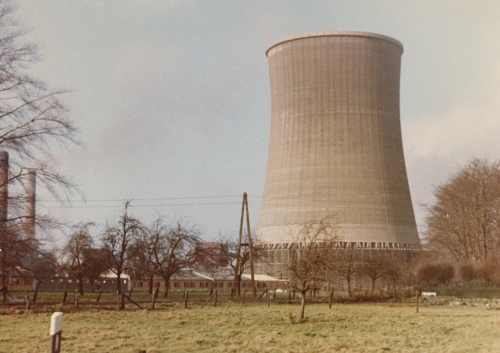


1962, Rugeley, the first application of the water-saving air-cooled (IDCT) Heller System. 


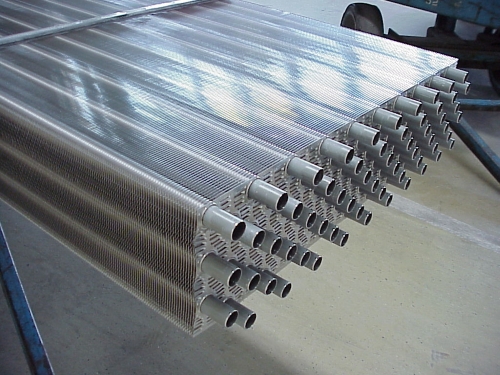
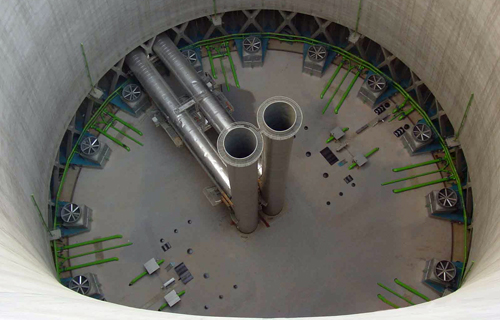
Heller Indirect Dry Cooling Systems include a water-cooled condenser, circulating machine groups, circulating water mains and a dry cooling tower accommodating Forgó-type water-to-air heat exchangers (below). The water-cooled condenser can either be DC Jet or Surface Condenser type.


Forgo Bundles and the Delta heat exchangers.


Condensation of turbine exhaust steam takes place in a water-cooled condenser while heat rejection takes place in a cooling tower. The system is practically insensitive to wind gusts owing to the thermal inertia of the large, one time water fill of the cooling circuit. Location of the cooling tower is unconstrained; it need not be in the vicinity of the steam turbine. Solutions are available for climatic extremes (extreme cold & extreme hot).


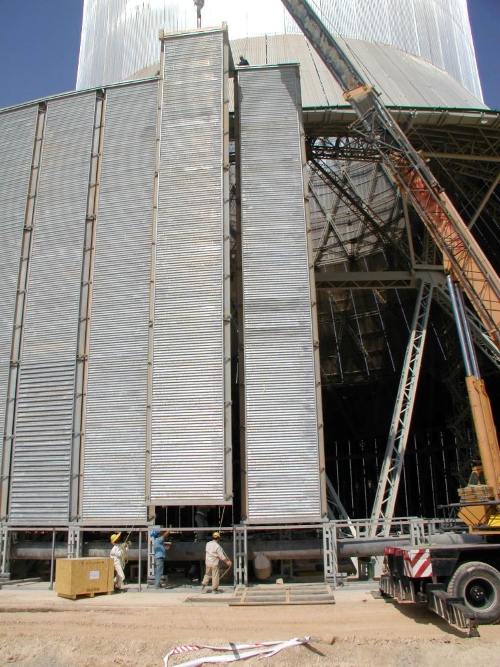
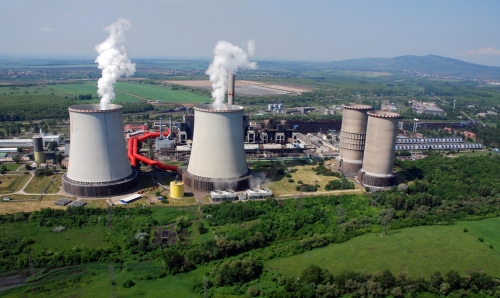
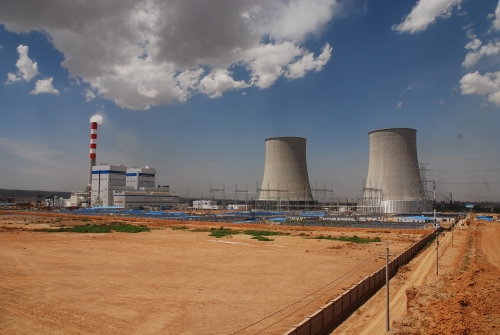
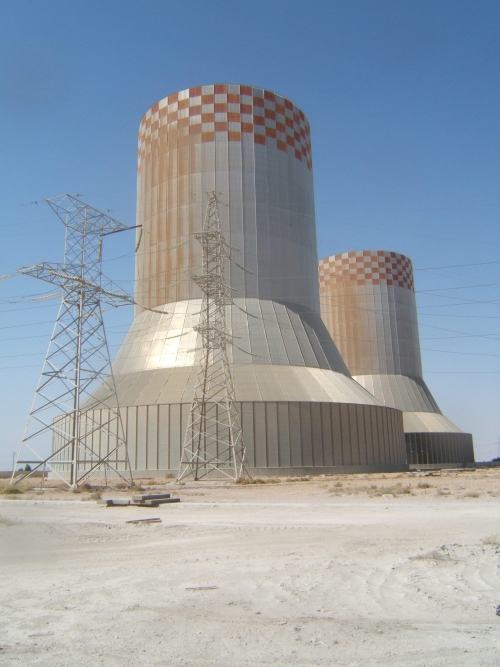
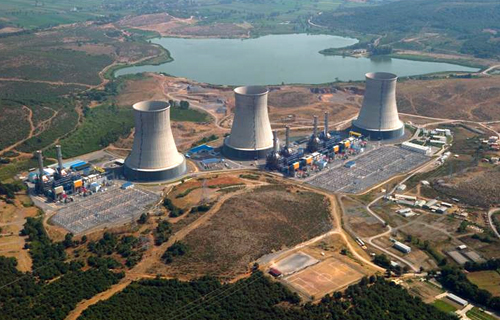
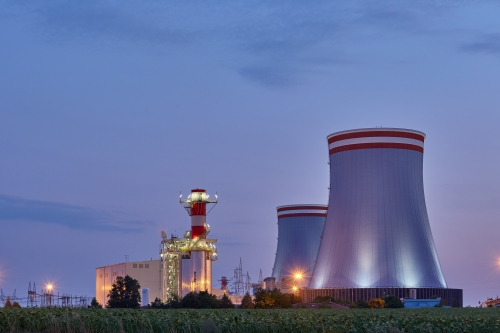
Natural draft cooling towers, concrete and steel construction


For more details, please have a look on our catalog and references here. 
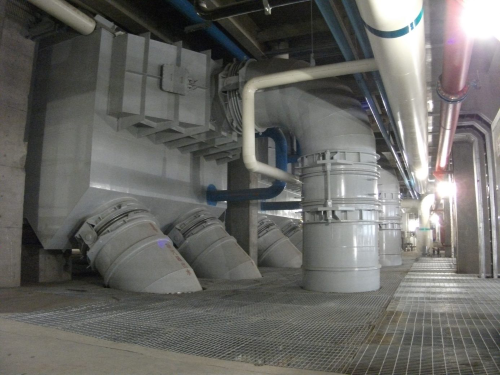
Direct contact (DC) jet condenser


The Direct Contact (DC) Jet Condenser is a high-efficiency cooling solution widely used in power plants and large industrial facilities. Unlike traditional surface condensers with tube bundles, the DC Jet Condenser has no finite surface or physical barrier between steam and cooling water. This design allows for faster and deeper vacuum formation, which means either the same vacuum can be achieved with a smaller cooling tower, or a stronger vacuum with the same tower size.


Because the vacuum chamber works in the same way as with surface condensers, vacuum hogging and holding remain quick and simple. In addition, the excess pressure of the cooling water returning from the tower can be harnessed in recovery hydro-turbines, mounted on a common shaft with the circulating water pump and motor. This intelligent energy recovery system reduces pumping power demand by 30–35%. 


Compared to conventional surface condensers, the Direct Contact Jet Condenser is cost-effective, highly reliable, and requires minimal maintenance. 


Its modular design makes it flexible and adaptable: optimized solutions are available for any turbine capacity and steam exhaust direction. 

Mechanical draft and Natural draft cooling tower
Mechanical and Natural draft cooling towers

Mechanical Draft Cooling Towers


Mechanical draft cooling tower designs, which are particularly advantageous in applications requiring low-profile, compact configurations. These towers incorporate induced draft fans located behind the heat exchangers, designed to minimize noise emissions. Additionally, air-coolers equipped with a spray system may be employed to enhance cooling capacity during the summer months.

When sprayed, the wetted surface of the air-cooler facilitates evaporation, significantly improving the heat rejection capacity. This results in lower cooling water temperatures, reduced turbine back-pressure, and enhanced turbine output.

The dry/sprayed configuration of the Heller system substantially reduces the annual make-up water requirement, typically only 5-15% of that required by conventional wet cooling towers. The combined use of dry and evaporative cooling not only ensures efficient plume-abatement but also provides a more cost-effective solution compared to traditional hybrid systems.


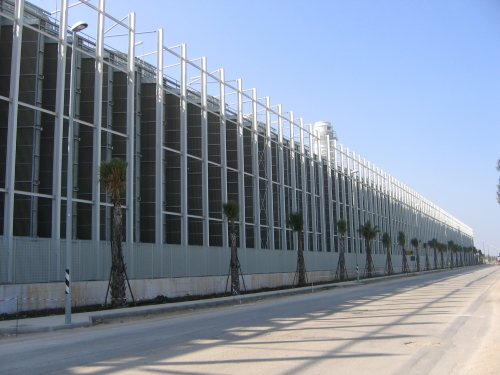
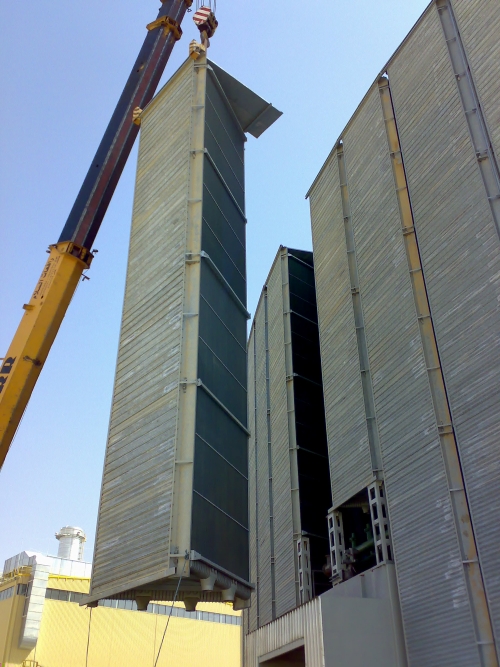
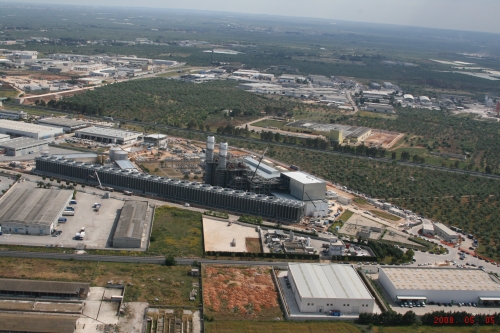
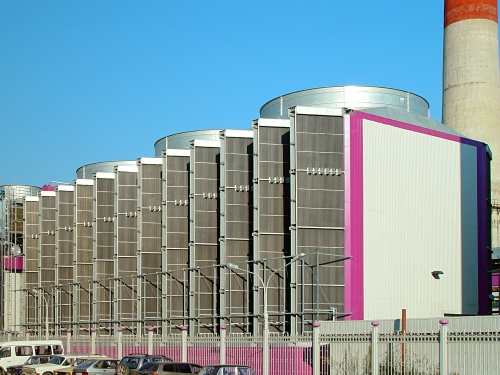
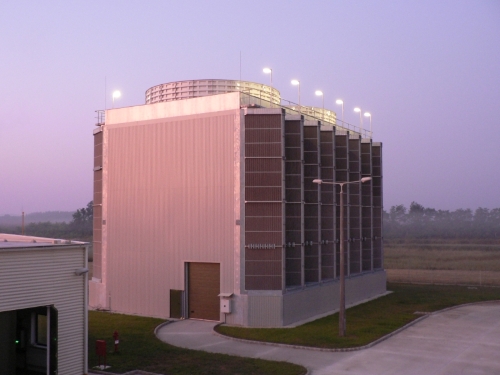
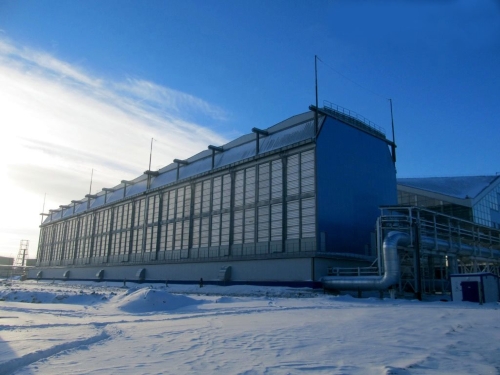
Mechanical draft Heller dry cooling towers are either cell-in-line or circular. The low visual profile, low noise, induced draft design enables siting of power plants in densely populated urban areas. Constrained plot areas do not restrict application of dry cooling, designs of different tower height, width and length are available. Winter-proof design makes the system applicable in harsh winter climate (even beyond the Polar Circle) and solutions are also available for extreme hot environment.


Natural draft cooling towers


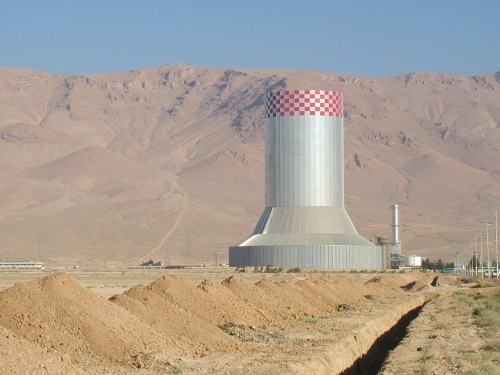
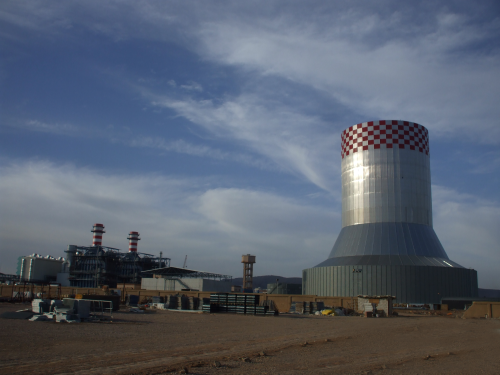
Natural draft cooling towers utilize buoyancy to induce airflow through the heat exchangers, eliminating the need for power-consuming fans. The warm air inside the tower rises naturally and exits through the top of the tower shell, ensuring continuous and efficient cooling. These towers are typically constructed from welded or bolted steel with aluminum cladding, although reinforced concrete hyperbolic shells are also suitable. Steel towers are particularly advantageous in regions with high seismic activity due to their superior resilience. The interior air within the cooling tower is generally warmer and drier than the surrounding environment, which helps prevent corrosion. 


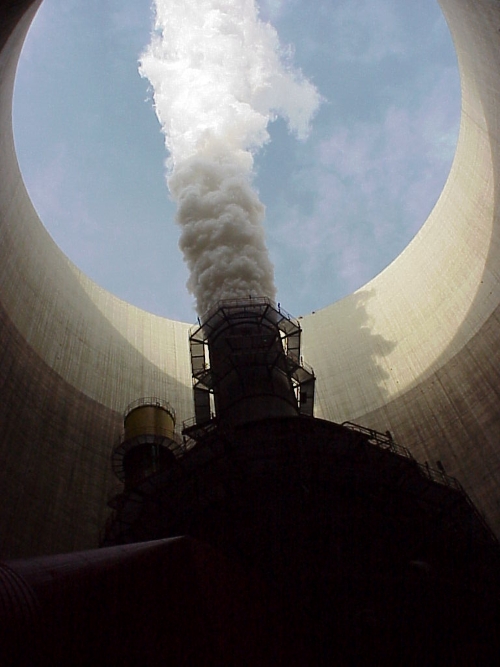
The huge thermal of the natural draft cooling tower lends itself to exhausting the clean flue gas via the concrete structure Heller dry cooling tower, thus saving investment and O&M costs and resulting in lower ground level concentration of remaining airborne pollutants. The natural draft cooling tower can accommodate short metal stacks (stack-in-tower) of CFB boilers, or the exhaust of wet scrubber or wet flue gas cleaning systems (FGD-in-tower) of conventional boilers.


Stack-in-tower FGD


For more details, please have a look on our catalog and references here. 
ACC (Air-cooled condenser)
Air-cooled condenser

MVM EGI provides innovative direct air-cooled condensers (ACC), ideal for combined cycle powerplant, concentrated solar, and thermal power plants like coal, biomass, and waste-to-energy. ACCs are perfect for regions where water is scarce, restricted, or expensive, as they do not require any cooling water.


In direct dry cooling, steam from the turbine flows through air-cooled fin tubes, where it is condensed without ever coming into contact with the cooling air. This process ensures a closed and highly efficient system. The cooling system features an A-frame tube bundle mounted on a steel or concrete platform. Beneath the fin-tube bundle, large fans draw in ambient air, which is discharged across the fin tubes to absorb the heat released during steam condensation. The heated air then exits the system above the tube bundles, completing the process.


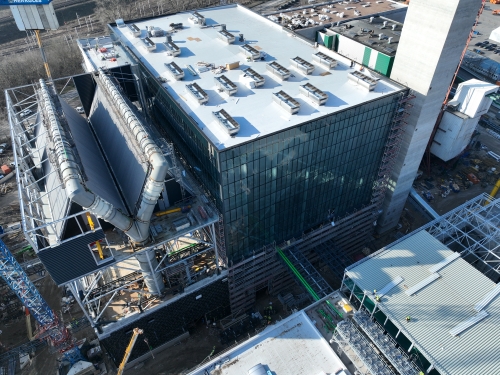
Warsaw ACC by MVM EGI


Discover more in our catalog, reference list, videos (EGI2025 or WED2025 video), and follow us on EGI LinkedIn